

DR. Dr. ARI DJATIKUSUMO, SpM
After completing his retinal fellowship in Japan and Singapore, Dr. Ari returned to Indonesia and worked as fa...
View Profile →
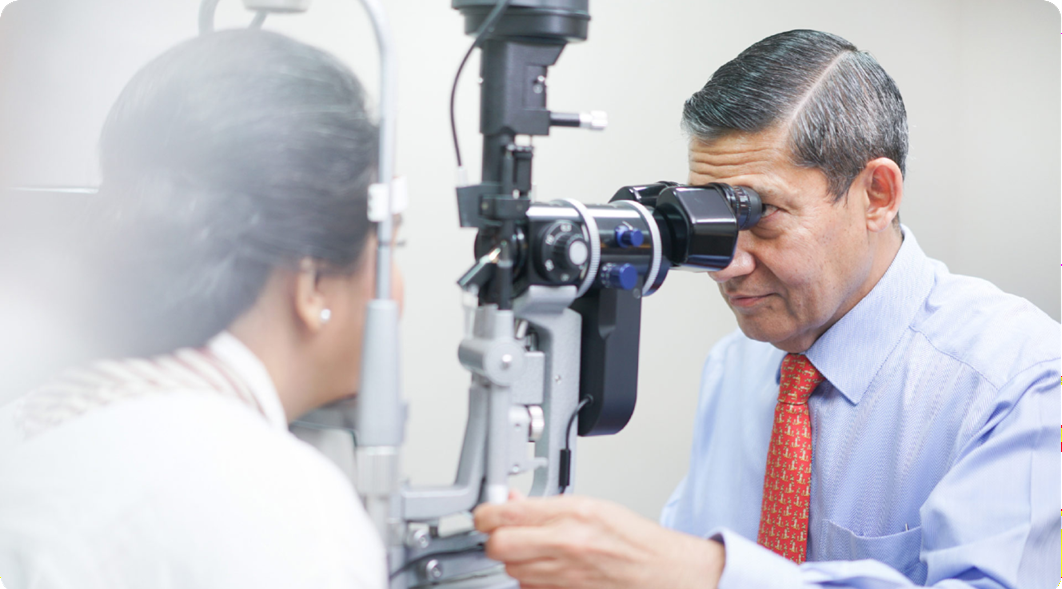
KMN EyeCare’s retina division is highly experienced in treating retina disorders. The retina, which consists of light-sensitive layers of tissue, is responsible for converting the light waves that are projected from the cornea and lens into electrical impulses that will be transmitted to the brain for processing. The neural layer of the retina consists of photoreceptors. As photoreceptors are unable to regenerate themselves, any damage to the neural layer of the retina can cause permanent vision loss.
The retina is the target of a wide range of structural and functional medical conditions. These conditions can be hereditary or acquired. Careful and meticulous examinations are thus required in order to produce a precise diagnosis for a certain retina condition.
Dr. Sjakon G. Tahija, as the Medical Director of KMN EyeCare, is determined to make KMN EyeCare the premier retina care center in Indonesia.
Not only are we equipped with the finest retinal diagnostic tools, we also facilitate our doctors training with fellowships overseas to advance their expertise in retinal surgeries.
For more details, please click on the video.
Complete information on retina disorder symptoms and treatment methods
Symptoms that are usually related to damage of or diseases of the retina include decreased visual acuity, metamorphopsia (distorted vision, such as straight lines looking crooked) , flashes of lights, floating dark spots in the visual field, sudden constriction of the visual field, and history of trauma or accidents. Some of these symptoms can appear when changes to the retina are still very subtle, hence a careful and thorough examination is required.
Our experts encounter a wide range of medical retina conditions on a daily basis. These conditions include diabetic retinopathy and diabetic macular edema, Age-related Macular Degenerations (AMD), Polypoidal Choroidal Vasculopathy (PCV), Central Serous Chorioretinopathy (CSR), retinopathy of prematurity, and other less frequent disorders too. These conditions require accurate assessments prior to the commencement of treatment in order to achieve the best possible treatment results. Our vitreoretinal diagnostic tools range from less-invasive ones such as ultrasonography and Optical Coherence Tomography (OCT) , to the more invasive Fundus Fluorescein Angiography (FFA) and Indocyanine Green Angiography (ICGA). To date, KMN EyeCare is the only eye center in Indonesia that provides Indocyanine Green Angiography.
Another treatment in the field of medical retina is the intravitreal injection of medicine directly into the vitreous cavity located in the center of the eye. We also offer laser photocoagulations, either using conventional laser photocoagulation or photodynamic therapy (PDT, or “Cold Laser”) using verteporfin (Visudyne®). Like Indocyanine Green Angiography, KMN EyeCare is the only clinic throughout Indonesia to offer PDT. We also deal with a great number of cases of subretinal bleeding, which often results from a late stage Polypoidal Choroidal Vasculopathy (PCV, a type of macular degeneration common to Asians). This is treated with intravitreal injections of a combination of a drug to liquify the blood and a gas to shift the blood from underneath the central part of the retina, known as the macula.
The combination of our experienced experts and state of the art diagnostic and therapeutic tools allows KMN EyeCare to provide high-quality medical retinal treatment to our patients throughout Indonesia.
There was a time where the only available treatment for certain macular conditions, such as Wet Age-related Macular Degeneration (Wet AMD), retinal neovascularization due to vascular disorders, and diabetic macular edema, was laser photocoagulation. Lasers were applied to these patients in order to prevent their vision from further deterioration. Those lasers did not, however, offer improvement of vision.
It was not until the introduction of drugs known as anti-Vascular Endothelial Growth Factor (anti VEGF), that one could improve their vision in such treatment cases. These agents are injected directly into the vitreous cavity in the center of the eye according to predetermined intervals so as to halt disease progression and even reverse the pathology of the retina. Thus, this method yields better results both structurally and functionally. There are three anti VEGF agents that are widely used in the present time: aflibercept (Eylea), ranibizumab (Patizra), and bevacizumab (Avastin). At KMN EyeCare, the injection process of the drugs are done in a sterile environment in our operating theater.
Considering the importance of these agents as first line treatments of many retinal conditions, it is our priority at KMN EyeCare to ensure that they are available at any given time in any of our hospitals or clinics. Furthermore, we offer a very competitive rate for these injections to ensure the accessibility of the medicine for anyone in need of such treatment.
Our highly-experienced vitreoretinal surgeons perform vitreoretinal surgery both in elective and emergency settings on a daily basis. These surgeries include vitrectomy, scleral buckling, as well as a combination of both. Unlike other eye centers that still routinely perform surgeries under general anaesthesia, almost all of our surgeries are done under local anaesthesia, which is intraoperatively safer for our patients and fosters an earlier recovery as well.
In addition to common surgical retinal conditions such as retinal detachments, we also perform surgeries for more complex retinal cases. These include conditions stemming from accidents or trauma including intraocular foreign body extractions; surgeries for macular puckers/epiretinal membrane and macular holes; retinopathy of prematurity; and tractional retinal detachments due to diabetic retinopathy or other proliferative processes. Furthermore, while several of our patients come directly to KMN EyeCare for retina treatment, we also perform a great number of surgeries on referral cases that have been sent to us by other eye care providers and centers nationwide.
Aside from their clinical activities with KMN EyeCare, our surgeons are also well-acknowledged as vitreoretinal lecturers and trainers both throughout Indonesia and abroad.
KMN EyeCare services are built upon the values of personal care, professionalism, and technological application. That’s why KMN EyeCare is proud to use the latest technological developments in the field of eye care. Below, you can read about the technological equipment we use to treat retina conditions in adults and infants.
Optos is the latest addition to KMN EyeCare’s technology in the field of retina. KMN EyeCare is the first center in Indonesia to utilize the OPTOS. The OPTOS is a diagnostic photographic tool for the retina that can produce 200 degree images of the retina in a single shot, which is called an “optomap.” This ability to capture such wide images is crucial to detecting retinal pathologies in the periphery, such as retinal tears or holes, tumors, or areas of insufficient blood perfusions that can be caused by diabetic retinopathy or other vascular diseases. Occasionally, these abnormalities appear in the periphery before spreading centrally to the back of the eye. Thus, being able to detect the disease at its early stages, while it is still in the periphery, is beneficial to both doctors and patients in the management of the patient’s eyes. This early detection reduces the potential cost of treatment while preserving the patient’s sight.
Heidelberg Spectralis® is a multidiagnostic eye care equipment that can perform three simultaneous tasks, Optical Coherence Tomography (OCT), Fundus Fluorescein Angiography (FFA) and Indocyanine Green Angiography (ICGA), thus significantly reducing the time needed to undergo these treatments. Another advantage of Heidelberg Spectralis® is that it is able to produce a “real time” video imaging of the initial angiographies, which is key in identifying subtle abnormalities of the retina that may otherwise be overlooked with procedures that only capture images rather than videos.
Heidelberg Spectralis® also allows clinicians to compare the conditions of specific parts of the retina from different examination time points. This is highly important in long-term retinal disorders, such as Age-related Macular Degenerations, to determine whether an ongoing treatment is still working or if another treatment is needed. This greatly enhances the end result of retinal disease treatments.
Assessing an infant’s retina can be challenging, as young children are often unable to hold still in front of conventional imaging equipment. Nonetheless, there are a number of retinal conditions specific to infants that require serial retinal examinations, such as retinopathy of prematurity (ROP). The Retcam Natus Envision is an imaging tool that eases the diagnostic process of such situations, as the device is hand-held by the physician and thus can be applied from any position. It enables clinicians to monitor the retinal condition of premature babies so that ROP can be identified as early as possible. The window of opportunity to treat ROP is very narrow and delayed treatment could cause infants to suffer permanent vision loss. As such, the Retcam Natus Envision plays a vital role in identifying such conditions.
Aside from producing color photographs and videos of an infant’s eye, Retcam Natus Envision can also do Fundus Fluorescein Angiography (FFA) that records the vascularization of the entire retina. KMN EyeCare is the first health institution in Indonesia to use the RetCam and is the only institution to conduct RetCam FA in Indonesia.
As retina treatments vary greatly from patient to patient, costs and pricing per condition may vary. Nonetheless, the costs for intravitreal injections at KMN EyeCare are as follows:
Pricing Information
For the cost of Retina Surgery, please contact KMN EyeCare Call Center.
Real experiences from our retina patients

“The first thing I noticed was the blurred vision like there was a membrane covering my eyes, so I couldn’t see clearly. After an eye examination my retina was torn and had to be operated on immediately. The effect after surgery is good! It’s been 1 month and the gas is dry, and everything is safe and the doctor says that I’m able to go anywhere..”
“My advice to all friends, and all people who have eye problems, is come to KMN EyeCare to check and consult your eye problems. Because KMN EyeCare will provide the best service for you.”
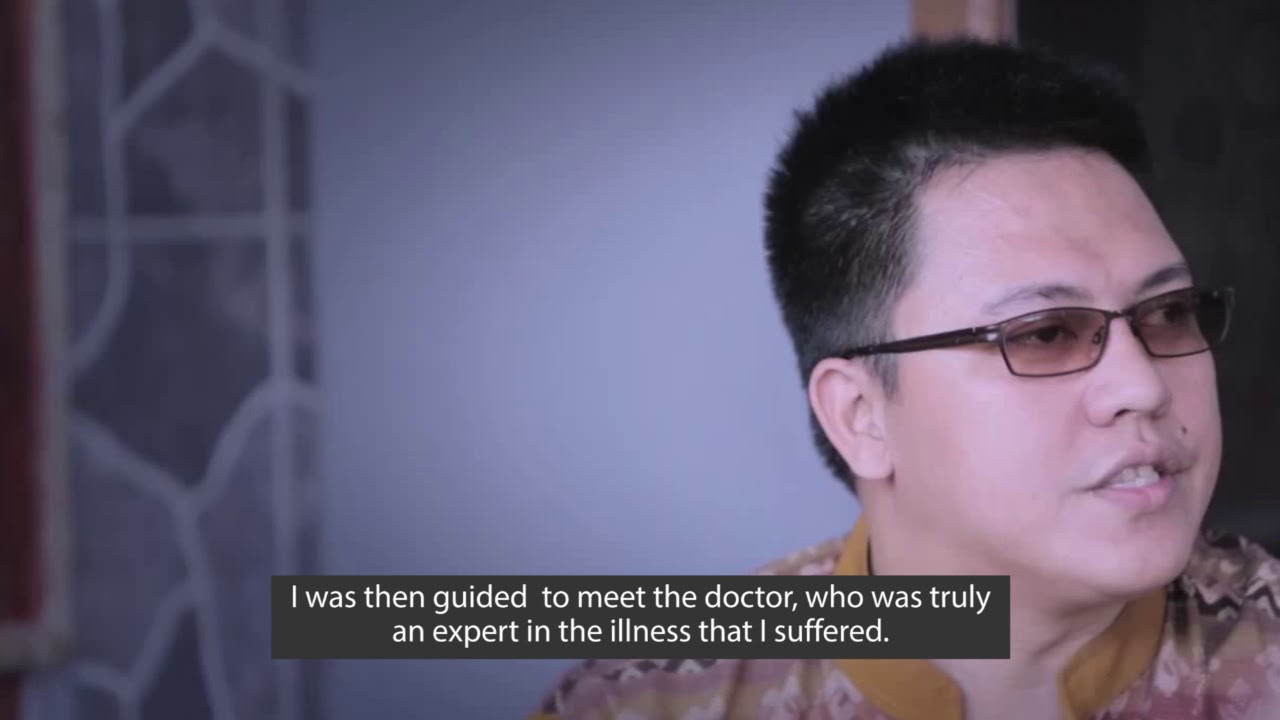
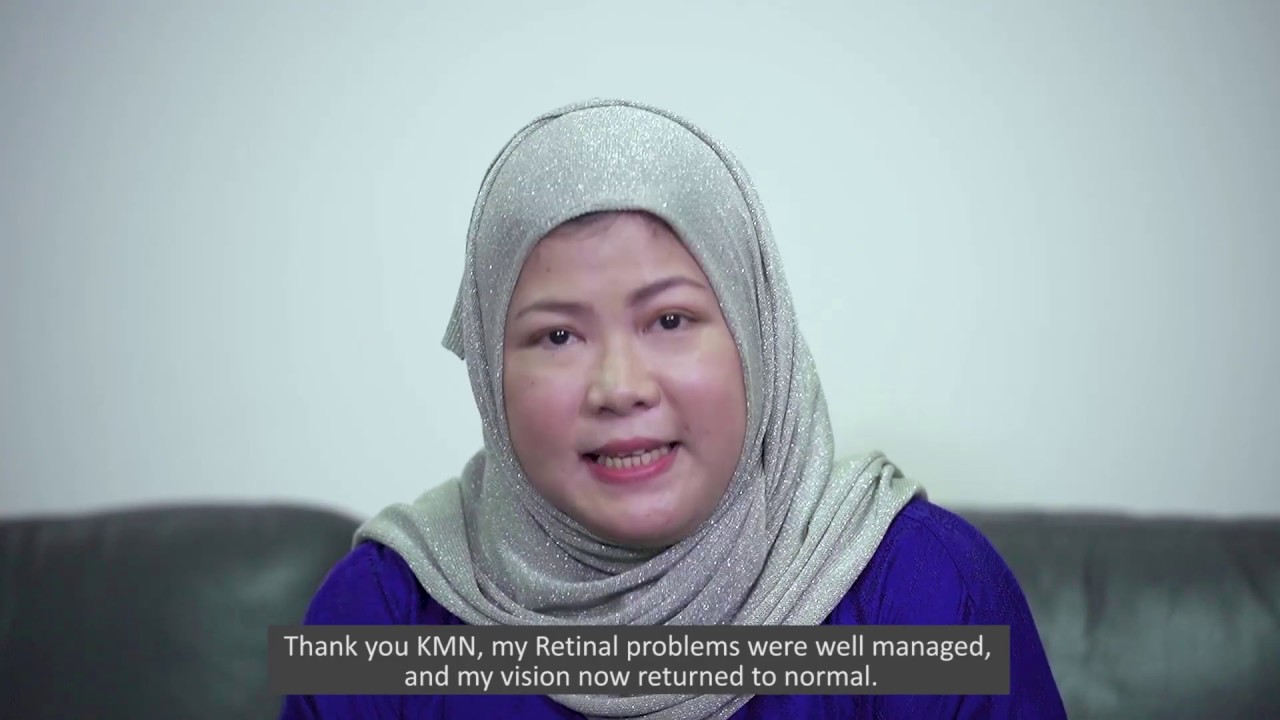
I have had Diabetic Mellitus type 1 for the last 22 years. My first indication of a problem was I noticed there’s like a black spot in the corner of my eye. At first I thought that my minus was increased because it was quite blurred. But after having an examination, I was confirmed to have bleeding in my Retina.
After the diagnosis, I was referred to go to KMN for further examination. After undergoing the surgery for my Diabetic Retinopathy, my vision improved and I could avoid the risk of loss of vision.
“The first thing I noticed was the blurred vision like there was a membrane covering my eyes, so I couldn’t see clearly. After an eye examination my retina was torn and had to be operated on immediately. The effect after surgery is good! It’s been 1 month and the gas is dry, and everything is safe and the doctor says that I’m able to go anywhere..”
“My advice to all friends, and all people who have eye problems, is come to KMN EyeCare to check and consult your eye problems. Because KMN EyeCare will provide the best service for you.”
I have had Diabetic Mellitus type 1 for the last 22 years. My first indication of a problem was I noticed there’s like a black spot in the corner of my eye. At first I thought that my minus was increased because it was quite blurred. But after having an examination, I was confirmed to have bleeding in my Retina.
After the diagnosis, I was referred to go to KMN for further examination. After undergoing the surgery for my Diabetic Retinopathy, my vision improved and I could avoid the risk of loss of vision.
“The first thing I noticed was the blurred vision like there was a membrane covering my eyes, so I couldn’t see clearly. After an eye examination my retina was torn and had to be operated on immediately. The effect after surgery is good! It’s been 1 month and the gas is dry, and everything is safe and the doctor says that I’m able to go anywhere..”
“My advice to all friends, and all people who have eye problems, is come to KMN EyeCare to check and consult your eye problems. Because KMN EyeCare will provide the best service for you.”
I have had Diabetic Mellitus type 1 for the last 22 years. My first indication of a problem was I noticed there’s like a black spot in the corner of my eye. At first I thought that my minus was increased because it was quite blurred. But after having an examination, I was confirmed to have bleeding in my Retina.
After the diagnosis, I was referred to go to KMN for further examination. After undergoing the surgery for my Diabetic Retinopathy, my vision improved and I could avoid the risk of loss of vision.
Our internationally trained retina specialists
Showing 8 of 8 doctors
After completing his retinal fellowship in Japan and Singapore, Dr. Ari returned to Indonesia and worked as fa...
View Profile →
Dr. Arief joined KMN EyeCare in Semarang in 2010 and completed his retinal fellowship in Thailand between 2012...
View Profile →
After graduating from the University Indonesia Medical School, Dr. Emil practiced at KMN EyeCare in Semarang b...
View Profile →
After graduating from the University of Gadjah Mada Medical School in 2000, Dr. Rini completed additional trai...
View Profile →
After completing his retinal fellowship at the Lions Eye Institute, Perth, Australia in 1994, Dr. Tahija retur...
View Profile →
After completing her ophthalmology residency at the University of Indonesia 2013 and several fellowship in ret...
View Profile →
After graduating as an ophthalmology specialist from the University of Gadjah Mada Medical School in 2003, Dr....
View Profile →
After completing her ophthalmology residency at the University of Indonesia Medical School 2012, Dr. Wulan wor...
View Profile →