


Dr. ANNETTE MARIZA, SpM
After graduating from University of Indonesia Medical School in 2004, Dr. Annette began her career in the Cila...
View Profile →
The freedom to see without glasses is not just about the end result, but also about choosing the technology that best suits your eyes and comfort.
At KMN EyeCare, two modern LASIK technology options are available from flap-based LASIK using a femtosecond laser that has been widely proven, to the latest generation of non-flap LASIK that is more minimally invasive without the creation of a corneal flap.
Please select the type of LASIK you would like to learn more about:

for more information about the latest technology available at KMN EyeCare.
Learn more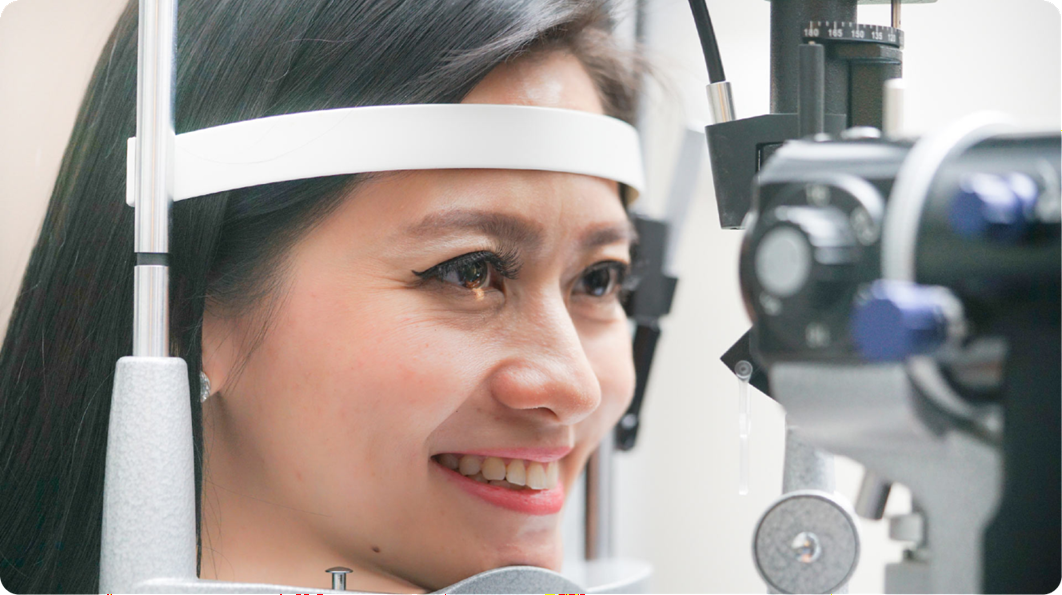
LASIK (Laser-Assisted In Situ Keratomileusis) is a modern refractive surgical procedure that helps reduce dependence on glasses and contact lenses.
LASIK is a solution for patients suffering from refractive errors/vision problems as mentioned above. LASIK is a permanent procedure that can eliminate the need for glasses or contact lenses.
At KMN EyeCare, LASIK provides a comfortable and enjoyable experience. This procedure does not use any "scalpel" at all. Our KMN EyeCare ophthalmologists are highly skilled in using the excimer laser technology approved by the FDA to correct patients' vision.
At KMN EyeCare, LASIK is performed quickly and without pain, with a fast recovery time and amazing results!
Although LASIK is now a well-known procedure, it stems from decades of research and experiments in surgical eye care.
In the 1990’s, LASIK was first introduced as a process that used excimer laser, a highly accurate laser that permanently reshapes a healthy cornea so as to foster clear vision without from the use of contact lenses or glasses.
In 1999, wavefront technology became available, allowing for the precise analysis of a person’s cornea refraction prescription map. The combination of the wavefront analysis with the excimer laser enables a unique, personalized cornea reshaping process for each patient.
Whether LASIK can be performed depends on each patient’s eye condition. A physician’s examination of the patient can determine whether or not the candidate is suited to LASIK surgery by better understanding the clinical features and requirements of each individual patient. Individuals considering the procedure should thus be sure to consult with their eye doctors before deciding on whether or not to move forward with the procedure, gaining an understanding of what exactly the procedure entails before, during, and after the process.
LASIK, or Laser-Assisted In Situ Keratomileusis, is a medical procedure performed to treat refractive errors such as:
by changing the thickness and curve of the cornea. Conventional LASIK surgery still uses a mechanical blade; however, LASIK is completely bladeless and uses only femtosecond laser. This results in far higher levels of precision and accuracy than conventional LASIK. LASIK at KMN EyeCare specifically uses two pieces of equipment: Femtosecond Laser and Excimer Laser. Only the combination of these two pieces of equipment can be termed "Bladeless" LASIK.
In all the years that KMN EyeCare has performed LASIK, there has never been a complaint that the treatment is painful. Prior to surgery, you will be given topical anaesthetic in the form of eye drops. No injections are required, and you remain conscious throughout the procedure.
There are 8 tests you must undergo:
You will undergo a series of comprehensive examinations that take approximately 2–3 hours.
LASIK can treat refractive errors including near-sightedness up to -12 Dioptre, astigmatism +/- 6 Dioptre, farsightedness up to 8 Dioptre. However, whether or not you are a candidate for LASIK depends on your corneal thickness.
If all goes to plan, LASIK treatment at KMN EyeCare takes 20 minutes from the time you enter to when you leave the operating room.
You will be given a list of “Do’s” and “Don’ts” for the two weeks after undergoing LASIK. In principle, you should use your eyes as soon as possible so as to adapt to your new vision. However, you should not rub your eyes, avoid getting water in your eyes, or wear makeup around the eye.
You should resume your activities as soon as possible after the procedure so your eyes can adapt to the new vision. However, avoid dust, extreme sports, rubbing your eyes, and wearing makeup. Trauma, dust, or water getting into your eyes may cause you to rub them, which can shift the flap position and interfere with the healing process.
KMN EyeCare’s pre-LASIK operation exam is comprehensive and, if you are not a LASIK candidate, your surgeon will not proceed. The general requirements for undergoing LASIK are as follows:
The types and length of side effects differ for each patient, but generally you will encounter a slight “grainy” feeling in your eye, glare, dryness and fluctuating visual acuity. These side effects are almost always temporary and generally disappear completely several months after the procedure.
This is extremely subjective and depends on each patient’s situation, but generally:
KMN EyeCare uses the latest bladeless LASIK technology to deliver the best results and maximum safety.
The first step in LASIK procedure is 3D Corneal Mapping, which determines your visual acuity using the wavefront analysis. Because each of your eyes is as unique as your fingerprint or DNA, your doctor needs an accurate and detailed analysis of each eye before moving on to the next steps. Wavefront analysis collects a high-definition 3D visual representation of each eye’s visual pathway by comparing light passing through your eye to the light pattern of a perfect eye. Your doctor then uses this information to help personalize each of your eye’s vision correction requirements so as to provide you with the best possible results.
Wavefront analysis technology measures your eyes’ unique imperfections 25 times more accurately than standard methods while capturing 1200 data points to accurately measure your unique vision imperfections and deliver a highly personalized treatment. (Source: Alcon)
The second step in the LASIK procedure is the flap creation, using the IntraLase method. KMN EyeCare uses iFS™ Advanced Femtosecond Laser, a 100% bladeless laser approach, to create your personalized flap. This method uses tiny, precise pulses of laser light to tailor and create the corneal flap customized to your unique eye shape. The LASIK flap, a thin layer of tissue, is then folded back in preparation to gently reshape the cornea. The iFS™ Advanced Femtosecond Laser takes only 10 seconds to create the flap, compared to other femtosecond laser technology that requires 30-40 seconds. Aside from that, the flap created is smoother and has a highly precise thickness.
The third step of the LASIK procedure is to gently reshape your cornea using an Excimer Laser based on your unique wavefront analysis measurements and correction information. Afterwards, your doctor will reposition the flap, and your procedure is complete. Your flap heals naturally to the underlying strombus bed.
Includes Pre-LASIK Examination Fee
* Cost of LASIK treatment for both eyes, excludes Doctor Consultation fees
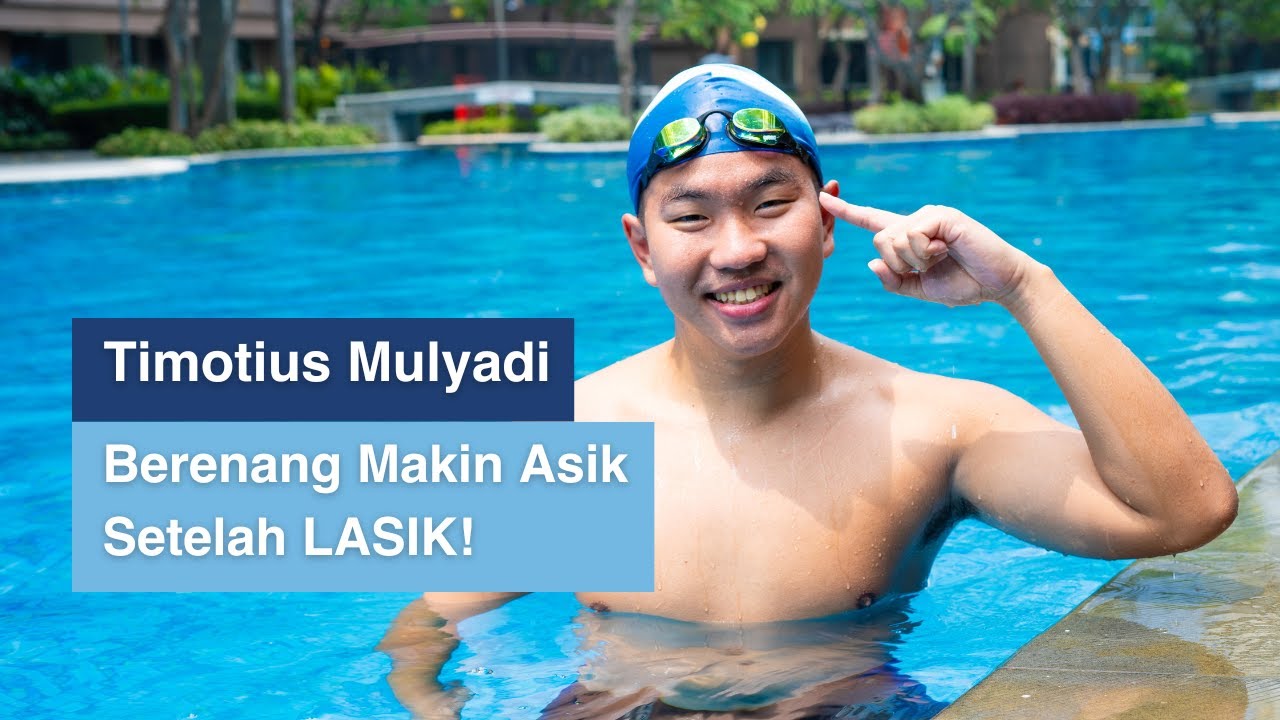
Real experiences from our LASIK patients














Experienced LASIK specialists at KMN EyeCare
Showing 14 of 14 doctors
After graduating from University of Indonesia Medical School in 2004, Dr. Annette began her career in the Cila...
View Profile →
Dr. Ira joined KMN EyeCare since its inception in 2004 and continues to practice in cataract, oculoplasty, and...
View Profile →
Dr. Maya joined the KMN EyeCare team after graduating from the University of Indonesia Medical School in 2010....
View Profile →
Dr. Sjahbudi joined KMN EyeCare in 2004 and has expertise in cataract and LASIK treatment.
View Profile →
After graduating from his residency in ophthalmology at the University of Indonesia, Dr. Viktor joined KMN Eye...
View Profile →
After graduating from the University of Sam Ratulangi Medical School in 2002, Dr. Ricky underwent several fell...
View Profile →
After graduating from the University of Indonesia Medical School in 2012, Dr. Rien immediately joined KMN EyeC...
View Profile →
After graduating from the University of Indonesia Medical School in 2003, Dr. Rifna joined KMN EyeCare in 2004...
View Profile →
After graduating from the University of Gadjah Mada Medical School in 2000, Dr. Rini completed additional trai...
View Profile →
After completing her specialization in ophthalmology and several fellowships, Dr. Nila immediately joined KMN...
View Profile →
After completing her ophthalmology residency at the University of Indonesia 2013 and several fellowship in ret...
View Profile →
After graduating as an ophthalmology specialist from the University of Gadjah Mada Medical School in 2003, Dr....
View Profile →
After completing his ophthalmology residency at the University of Sam Ratulangi Medical School, Dr. Vinsen pra...
View Profile →
After completing her residency in ophthalmology at the University of Indonesia, Dr. Widowati (Dr. Ike) continu...
View Profile →